Free Welcome Back Cards | Welcome Back to Work Greetings
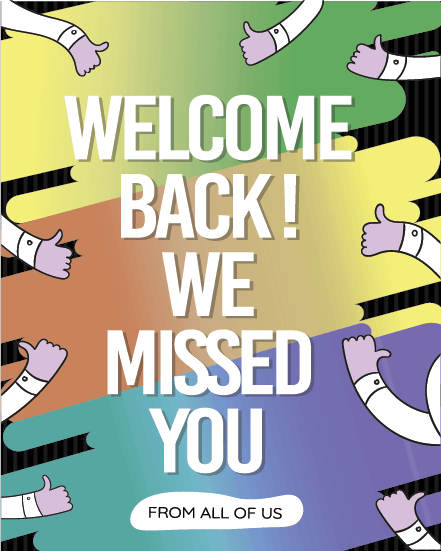
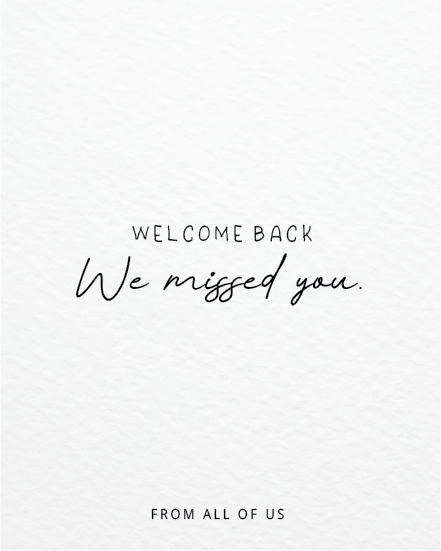
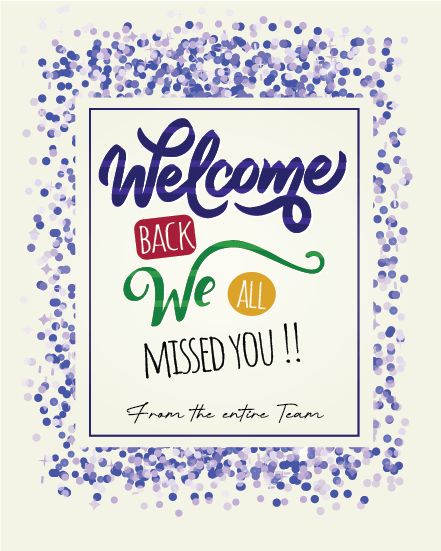
Create thoughtful welcome back cards and share your heartfelt messages.
- 1
- 2
- 3

Create thoughtful welcome back cards and share your heartfelt messages.
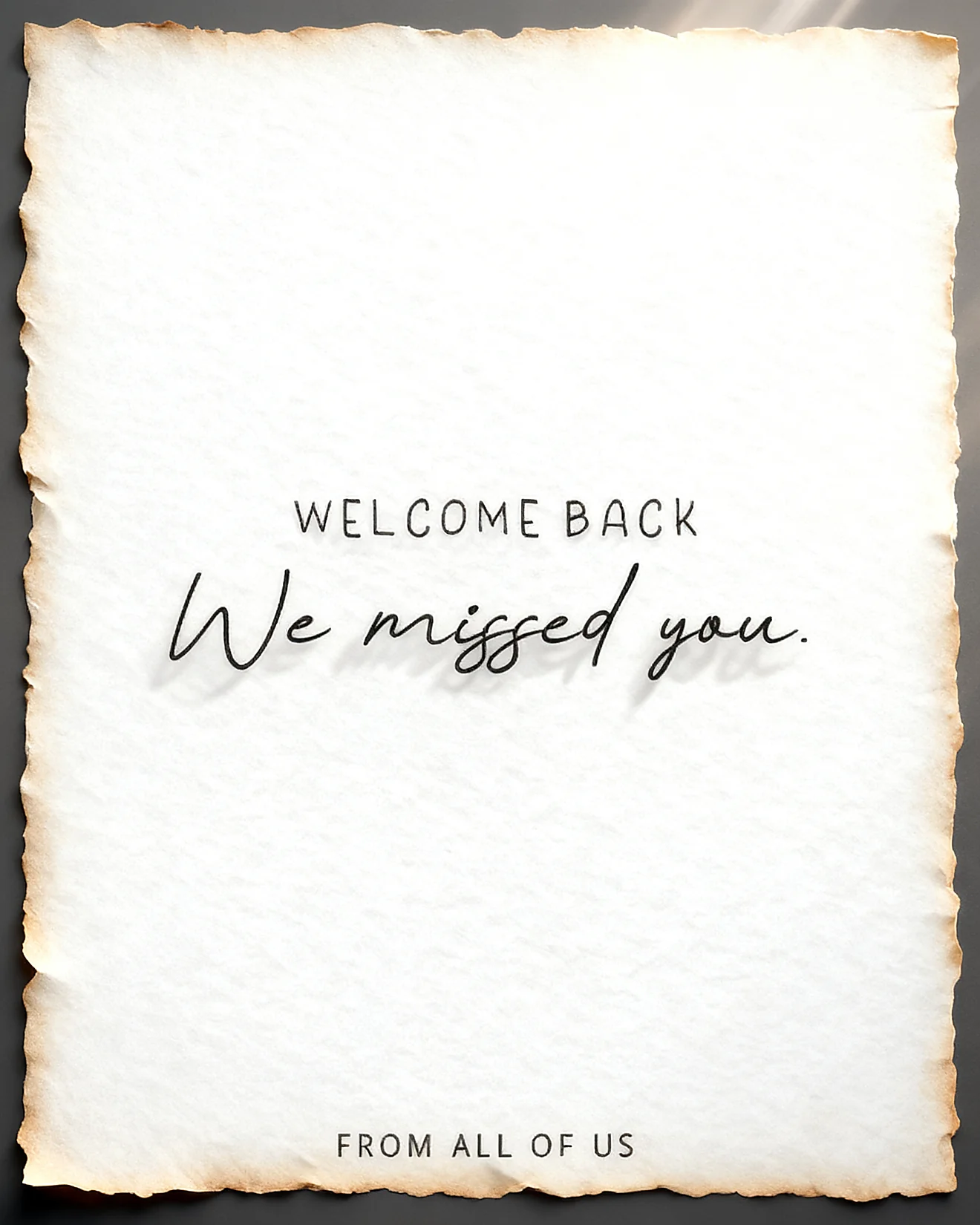
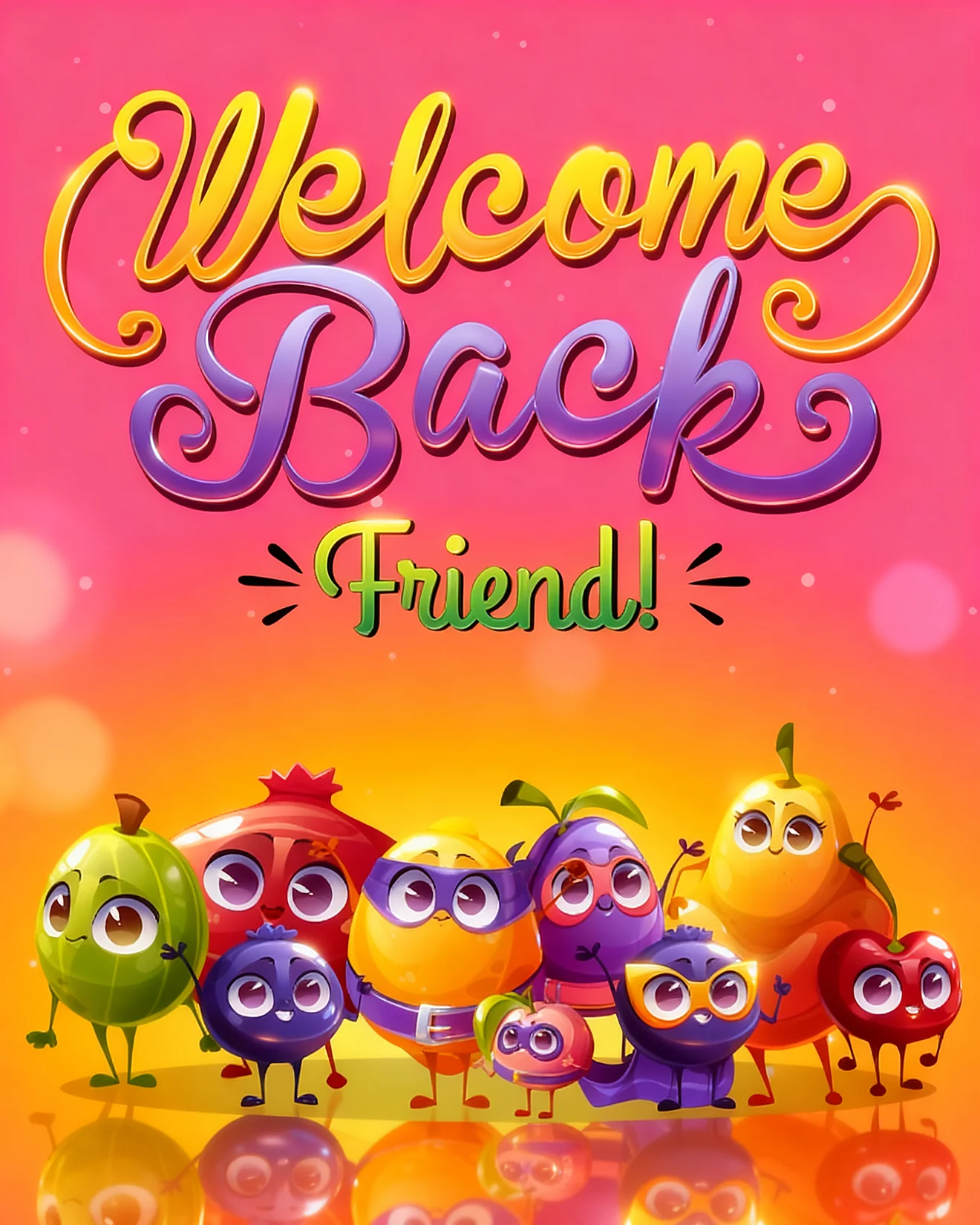
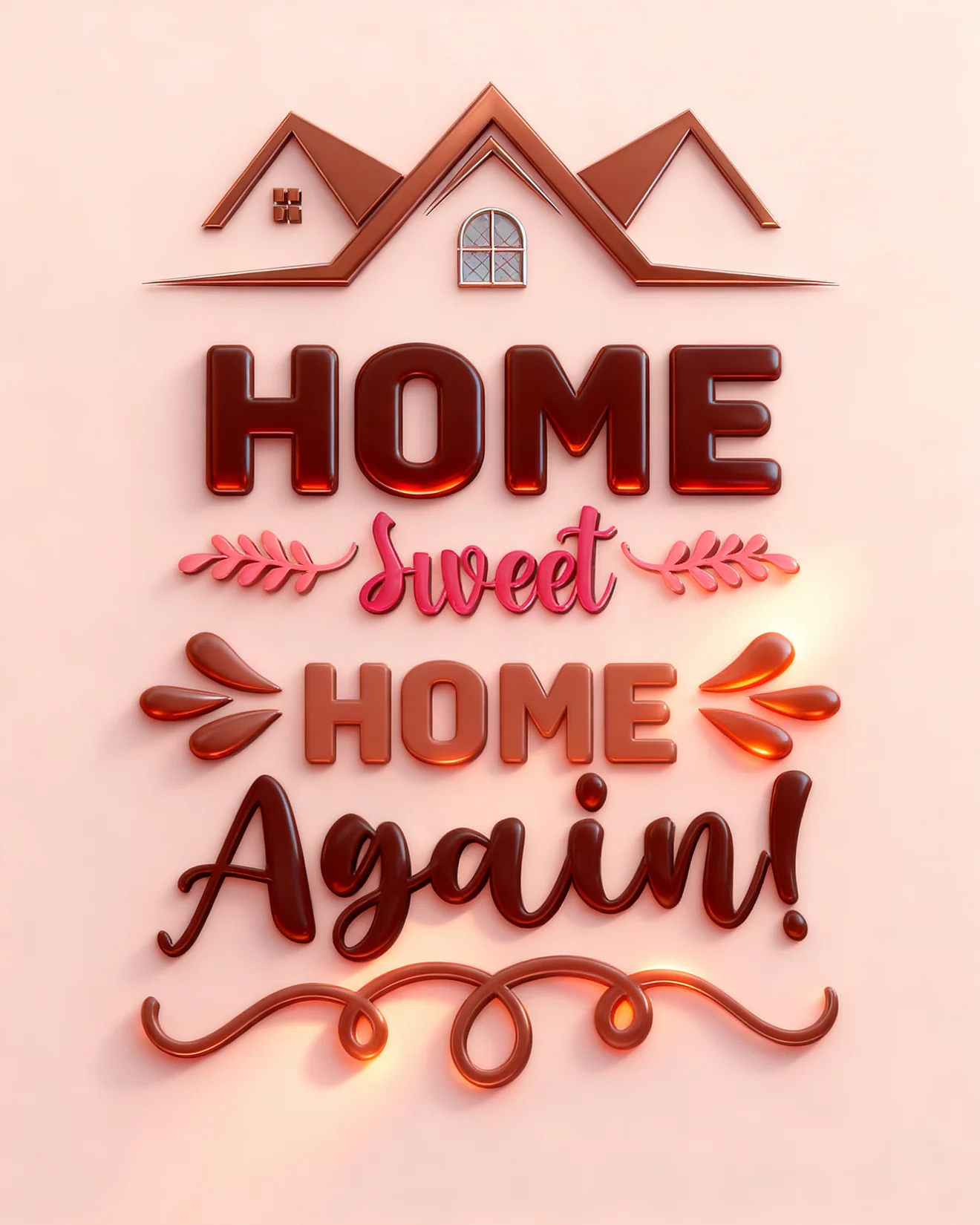
Coming back after an extended absence is quieter and harder than most people expect. Whether it is parental leave, medical recovery, a bereavement, or a sabbatical — the first day back carries its own weight. A welcome back card from the whole team does something an HR email or a Slack message cannot: it says the people you work with actually noticed you were gone, and are genuinely glad you are back.
Not every welcome back message sounds the same — and it should not. The tone matters as much as the words.
Keep it short and match your message to your relationship with the person. In a group card especially, two or three genuine sentences from each person means more than one long message from a single team member.
For more examples sorted by the reason for absence, the welcome back messages guide covers every situation — from maternity leave to career breaks. And for short lines suited to group cards and team announcements, the welcome back captions article is worth reading before you write.
A group welcome back card does something individual messages cannot — it shows the returning person that the team collectively noticed their absence and collectively wants them back. Share the card link via email, Slack, or Teams. Each person adds their own message without needing an account, and the returning colleague opens one complete card from everyone delivered as an interactive wishboard they can keep.
For the team that sent a farewell card when the person went on maternity leave, our maternity leaving cards and welcome back cards work as natural companions. And if someone is still recovering from illness and not yet back, our get well soon cards carry that same supportive warmth in the meantime.
Match the tone to why they were away. For parental leave, keep it warm and celebratory. For medical leave or bereavement, keep it gentle and avoid asking personal questions. For vacation or sabbatical, a lighter tone works well. In all cases, keep it short — two or three sincere sentences from each person is more meaningful than one long message.
Yes — share the card link and each team member adds their own message from any device without needing an account. There is no limit on contributors. The returning person receives one complete card from the whole team, playing as an interactive wishboard they can revisit anytime.
Yes, but keep the tone gentle and the message brief. Acknowledge their return without referencing the loss directly unless they have brought it up themselves. One warm, supportive line is enough — the gesture itself says more than the words.
On their first day back, or the day before if you want it waiting in their inbox when they arrive. For remote employees especially, a card timed to arrive on the morning they return is a genuinely impactful gesture.
Yes, with light ad support. Cards stay active for three years so the recipient can revisit the wishboard anytime. A premium ad-free version is available anytime.