
10 Best Websites for Sympathy Cards in 2026

Finding a sympathy card online should have been simple. I wanted something calm and respectful that could carry more than one person’s condolences, but most search results led either to individual eCards, printable templates, or platforms that only revealed their charges at the final step. Some offered group signing but limited the number of contributors, while others had useful memorial features hidden behind higher-priced plans.
That experience is why I created this comparison. I went through the available sympathy and condolence card websites to understand what each one actually offers—from free group signing and private sharing to photos, voice or video memories, scheduled delivery, gift collections, and downloadable keepsakes. I also looked at where each platform falls short, because the best option for a workplace may not be the right one for a family, close friend, or memorial tribute.
The list below begins with genuinely useful free options before moving to paid platforms and more specialized services. Sendwishonline ranks first for its broad free offering, including individual and group cards, unlimited contributors, a free Wishboard, multimedia messages, and PDF download. However, other websites remain better suited to specific needs such as collecting money for flowers, creating a detailed memorial board, or sending a faith-based condolence card.
The Short Version
- Sendwishonline: Best overall free sympathy card website for individuals and groups
- TheeCards: Best free alternative for regular and animated sympathy eCards
- GroupGreeting: Best paid option for a traditional multi-page group card
- Thankbox: Best for combining group condolences with an optional supportive gift
- EcardForest: Best for a simple, privacy-conscious group sympathy card
- Kudoboard: Best for a photo- and video-led memorial tribute
- GreetPool: Best for unlimited group messages with workplace tools
- GroupTogether: Best for a card and gift collection in supported countries
- 123Greetings: Best for a quick, free card from one sender
- DaySpring: Best for Christian and faith-based sympathy cards
What Matters When Choosing a Sympathy Card Website?
A long feature list does not automatically make a service appropriate for grief and loss. These are the details that make the biggest practical difference:
- A respectful recipient experience: The card should open easily and avoid distracting ads, confusing steps, or an overly festive presentation.
- The right participation format: Decide whether the card comes from one person or whether family members, friends, or coworkers need to sign together.
- Low contributor friction: A shared link and account-free signing make participation easier, especially when people are already dealing with a difficult situation.
- Meaningful personalization: Photos, longer written memories, voice notes, and videos can be valuable when used sensitively.
- Private delivery control: Scheduled delivery helps the organizer choose an appropriate time instead of sending the card automatically as soon as it is complete.
- A lasting keepsake: A PDF, video, printed book, or permanent online board gives the recipient a way to revisit supportive messages later.
- Clear pricing: Some services are genuinely free, while others let users create a card for free but charge before delivery.
1. Sendwishonline — Best Overall Free Sympathy Card Website
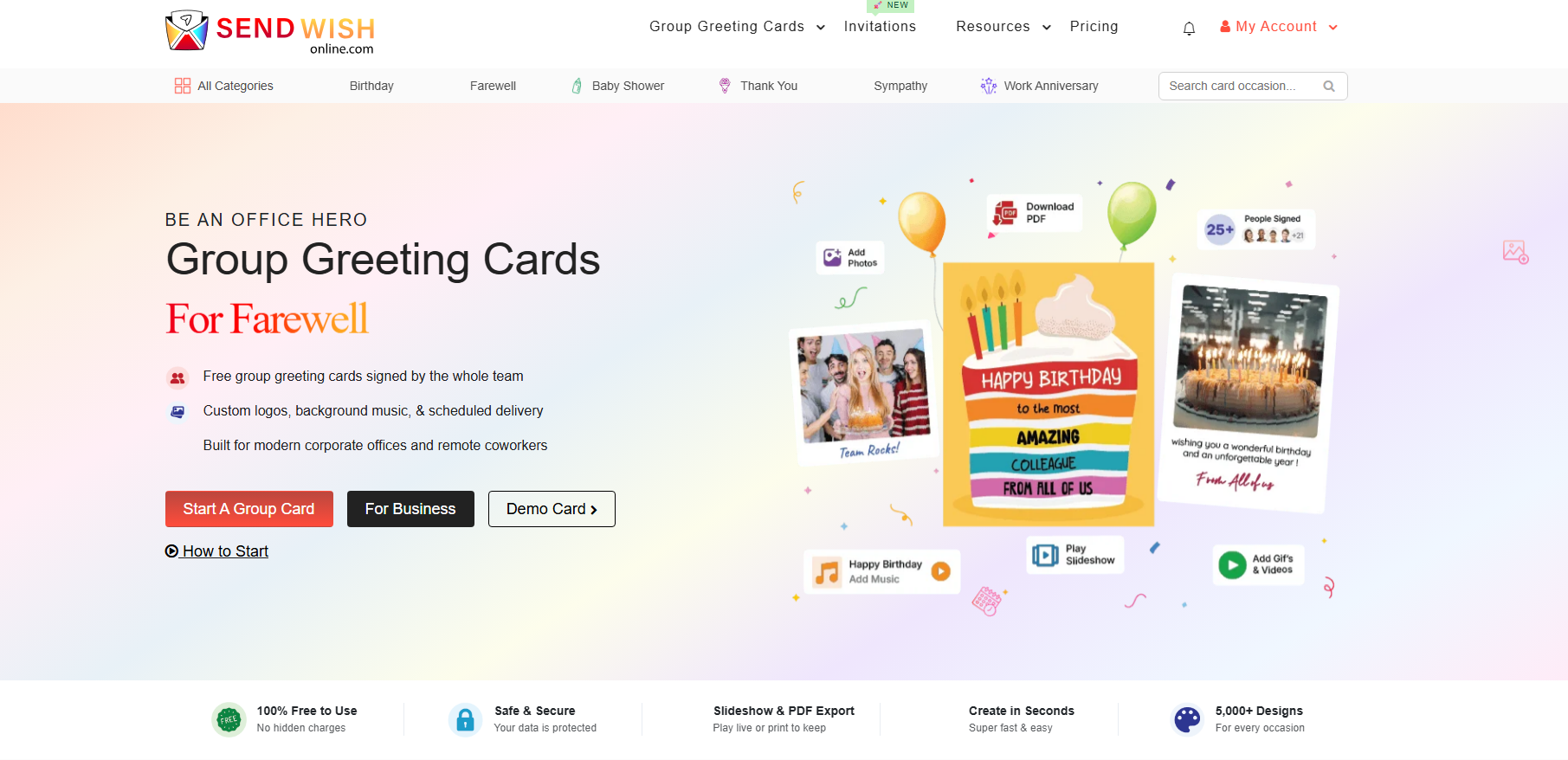
Sendwishonline takes the first position because it covers the widest range of sympathy-card needs without making collaboration or the finished keepsake dependent on a paid card. A single sender can create a personal condolence eCard, or the organizer can share one link with family members, friends, coworkers, or an entire community and collect everyone’s messages in the same place.
This flexibility matters during bereavement. A colleague can add a short professional note, a close friend can share a photograph, and a family member can contribute a longer memory without one person having to write on behalf of the whole group. Contributors do not need to create individual accounts, and the platform supports unlimited signatures, so the same process works for a few close friends or a large workplace.
Sendwishonline also gives contributors more than a text box. Depending on what feels appropriate for the recipient, people can add photos and GIFs or record audio and video messages. A voice note can feel more personal than typed text, while a short video can preserve a story or memory in the speaker’s own words. These features should be used thoughtfully—a quiet written card may still be the better choice for a formal or recent loss—but having the option makes the platform suitable for more relationships and situations.
The completed messages can be viewed as a traditional greeting card, played as a slideshow, or presented through a free Wishboard. The Wishboard works as a shared condolence or remembrance wall, giving people more room to post memories and photographs without requiring a separate tribute-board service. The completed card can also be downloaded as a PDF on the free version, creating a keepsake the recipient can save or print.
Why Sendwishonline ranks first
- Free sympathy cards for an individual sender or a group
- Unlimited contributors through one shared link
- No account required for invited signers
- Written messages, photos, GIFs, audio recordings, and video messages
- Greeting-card, slideshow, and Wishboard presentation options
- Free Wishboard for a larger condolence or remembrance collection
- Scheduled or immediate digital delivery
- Free PDF download for a lasting digital or printable keepsake
- Calm sympathy, pet-loss, memorial, and funeral card categories
- Paid batch-card tools for organizations that manage multiple employee cards
Where another website may fit better: Sendwishonline does not need to be the answer for every situation. Thankbox is more convenient when the group’s main priority is collecting money for flowers or another supportive gift. Kudoboard offers dedicated higher-capacity memorial products for an extensive life tribute. DaySpring is a more focused choice when the recipient specifically values Christian scripture and faith-led wording.
Best for: Individuals, families, friend groups, communities, remote teams, HR departments, and larger organizations that want a free and flexible sympathy card with group participation and keepsake options.
2. TheeCards — Best Free Alternative for Animated Sympathy eCards
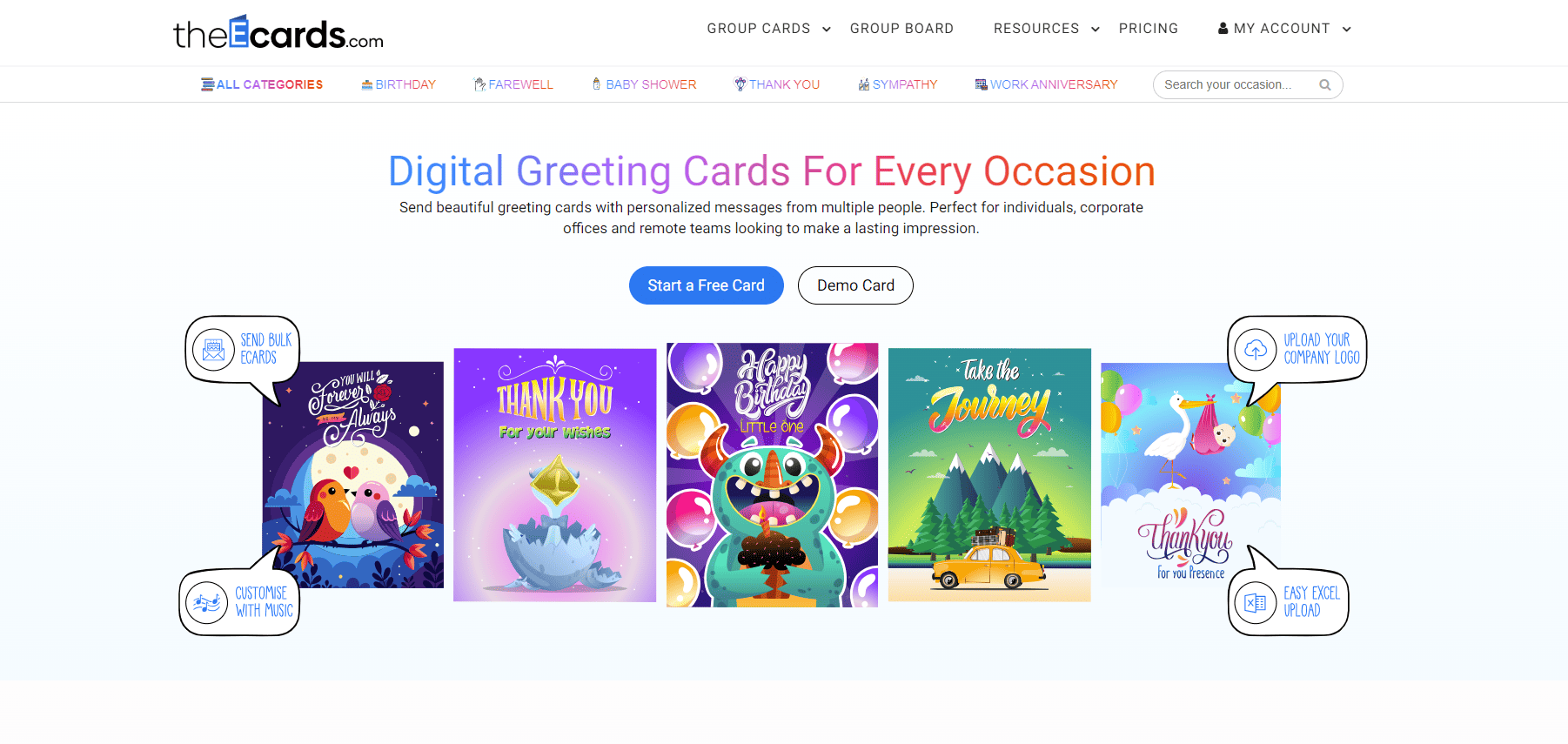
TheeCards is a useful free alternative for senders who want a straightforward sympathy eCard with a choice between regular and animated designs. The creation process is simple: choose a card, enter the recipient details, add a message, and invite other contributors when the card is coming from a group.
Its sympathy collection focuses on subdued, comforting designs rather than treating a condolence card like a general celebration. Senders can personalize the card with messages and visual media, and scheduled delivery helps ensure it reaches the recipient at an appropriate time.
What it does well
- Offers free and premium sympathy designs
- Includes regular and animated card options
- Supports individual and group sending
- Allows messages, photos, GIFs, and other media on supported cards
- Provides scheduling and workplace batch tools
Where it may not fit: Some designs and advanced features are premium, so users should confirm the selected card’s access level before inviting contributors. Sendwishonline provides the broader free condolence-wall and keepsake combination.
Best for: Individuals or groups that want a free sympathy eCard with simple customization and animated design choices.
3. GroupGreeting — Best Traditional Multi-Page Group Sympathy Card
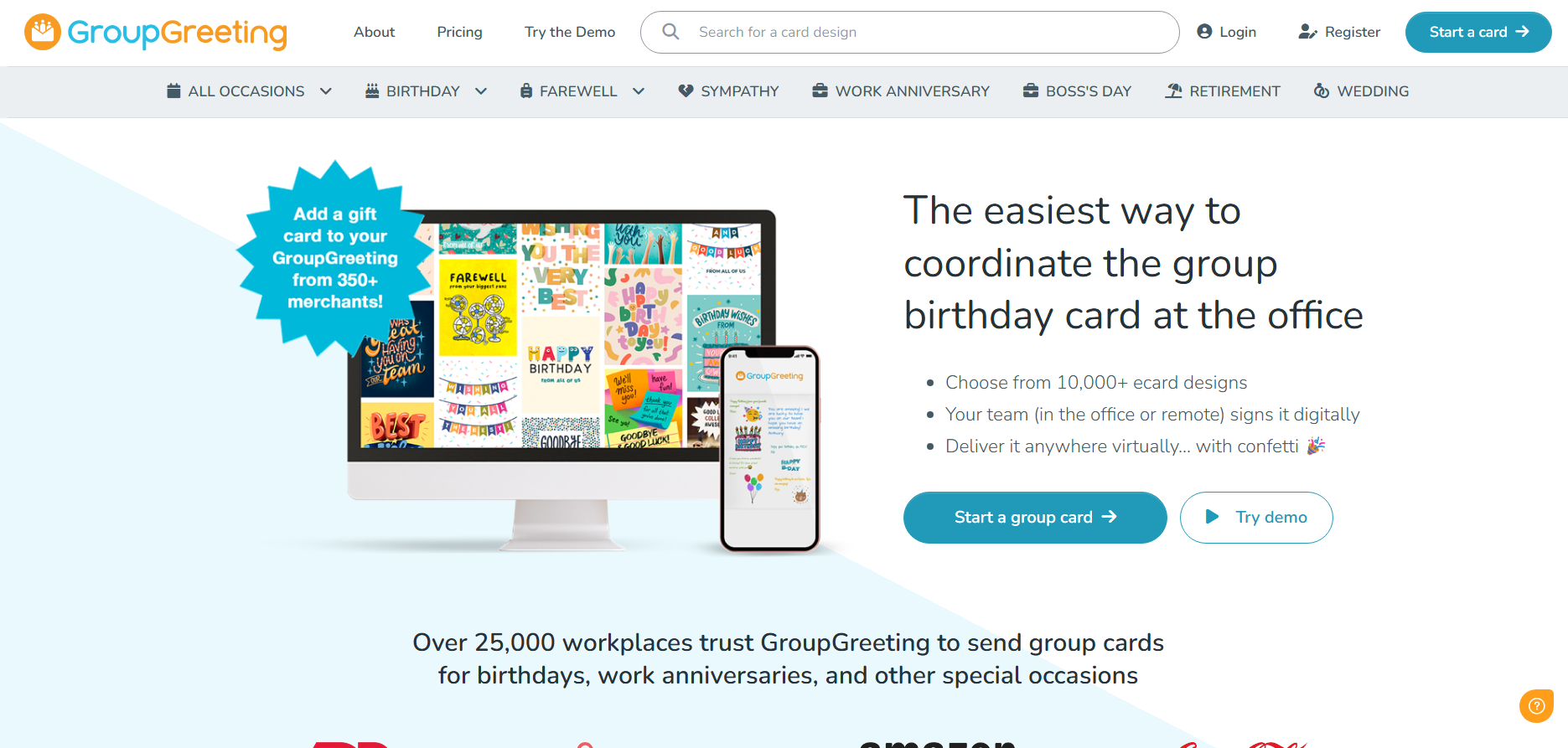
GroupGreeting is one of the strongest paid options for people who want the familiar experience of passing a card around, translated into a digital format. The organizer creates one sympathy card, shares the signing link, and the platform adds pages as more people contribute.
That expanding layout works well for an office or community where every person needs their own space. Contributors can add written condolences, photos, GIFs, and stickers, while the recipient can download a digital PDF copy. The service also avoids ads on the completed card, which supports a calmer presentation.
What it does well
- Unlimited signatures and digital pages
- Traditional card-style reading experience
- Photos, GIFs, and stickers
- Optional gift cards
- Recipient PDF keepsake
- No advertising on the card
Where it may not fit: GroupGreeting does not offer a genuinely free delivered group card. Its individual card costs $5.99, and organizational bundles must be used within twelve months.
Best for: Offices, families, and community groups that prefer a polished, traditional card and are comfortable paying per card.
4. Thankbox — Best Sympathy Card With an Optional Group Gift
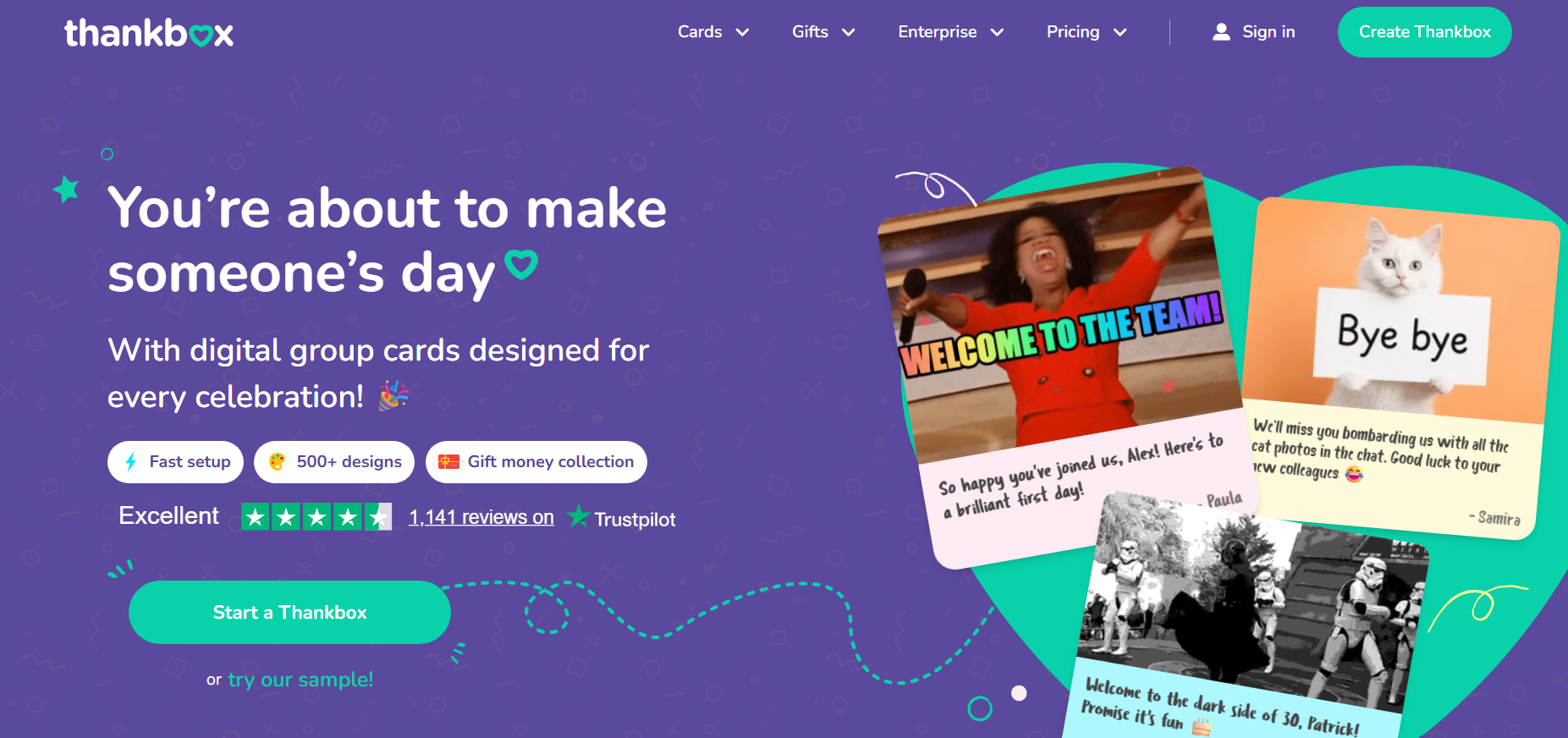
Thankbox is designed for occasions when a group wants to send supportive messages and may also want to collect money for a practical gift. Contributors can write without message-length limits and add photos, videos, or GIFs, giving close friends and coworkers room to express condolences in different ways.
The optional collection is its clearest advantage. Depending on location, the group can contribute toward a digital gift card or flowers while signing the same sympathy card. This removes the need to coordinate one link for messages and another for money.
What it does well
- Unlimited messages and no message-length limit
- Photos, GIFs, and videos
- Optional group collection
- Gift-card choices and UK flower options
- No account required for contributors
- Scheduled delivery and organizer controls
Where it may not fit: “Start for free” means the organizer can build the card and collect messages before paying; it does not mean the final sympathy card is free to send. The Classic Thankbox was listed at $5.99 during our comparison. Gift and flower availability also varies by country.
Best for: Coworkers, friends, or families who want to combine condolences with a thoughtful financial contribution, flowers, or a gift.
5. EcardForest — Best for Simple, Privacy-Conscious Group Condolences
EcardForest keeps its process intentionally simple. The organizer chooses a sympathy design, receives a link, invites others to sign, and sends the finished card digitally or schedules its delivery. Registration is not required to begin, which reduces friction for a group coordinating support quickly.
Paid cards remain available online, and the organizer can download a printable PDF. The platform also supports optional money collections, which may be useful when a group wants to contribute to flowers or another form of support.
What it does well
- Group signing through a shared link
- Registration-free creation process
- Immediate or scheduled digital delivery
- Printable PDF download
- Optional group money collection
- Straightforward interface without an extensive workplace suite
Where it may not fit: EcardForest uses a try-before-you-buy approach. Users can create and preview a card first, but should check the live price before planning delivery. It also offers fewer presentation formats than Sendwishonline or Kudoboard.
Best for: Groups that want a simple sympathy card, minimal account friction, and an optional contribution collection.
6. Kudoboard — Best for a Detailed Memorial Tribute

Kudoboard treats the sympathy message as a visual board rather than a conventional folded card. Contributors can add written condolences, photographs, GIFs, and videos, allowing a family, community, or workplace to build a richer collection of memories.
This format becomes especially valuable when the purpose extends beyond supporting someone after a loss and moves toward commemorating the person who died. Larger plans can be downloaded, played as a slideshow, or turned into a printed book or poster. Kudoboard also offers a dedicated Memorial product for extensive tributes.
What it does well
- Strong photo, video, and memory-led board format
- Suitable for many contributors
- Slideshow and download options on applicable plans
- Printed book and poster choices
- Dedicated memorial product
- Business plans with branding, controls, and integrations
Where it may not fit: It can be more product than a small group needs. Current single-board pricing starts at $6.99 for up to 20 posts, while the dedicated Memorial board is listed separately at $99. A simple sympathy card may be more economical elsewhere.
Best for: Memorial committees, workplaces, families, and communities creating a substantial visual tribute rather than a short condolence card.
7. GreetPool — Best for Unlimited Messages and Workplace Management
GreetPool creates digital group sympathy cards with unlimited signers and messages. Contributors can add condolences through one link, while photos and GIFs help the group preserve memories when visual content is appropriate.
Its team plans, reminders, custom designs, and bulk-card functions make it particularly relevant to HR and people teams. A printable PDF keepsake gives the recipient a permanent copy rather than leaving the messages accessible only through a web link.
What it does well
- Unlimited signers and messages
- Photos, GIFs, reminders, and notifications
- Printable PDF keepsake
- Team plans and bulk creation tools
- Predictable single-card pricing
Where it may not fit: The sympathy product page lists delivery at $4.99 per card. Users can create and collect messages before paying, but that should not be confused with a completely free final send.
Best for: Workplaces that want a paid group sympathy card with predictable pricing and tools for recurring employee occasions.
8. GroupTogether — Best for a Sympathy Card and Collection
GroupTogether combines a group sympathy card with optional gifting. Contributors use one link to add messages and photos, and the organizer can send the finished card digitally or download it as a PDF.
The gift collection can be helpful when coworkers want to support a grieving colleague with flowers, food, or a flexible eGift card. Its flat card price also makes the cost easy to understand before the organizer begins.
What it does well
- Unlimited group messages
- Photos and personalized card content
- Digital delivery and printable PDF
- Optional group gift collection
- No login required for contributors
Where it may not fit: The card is available internationally, but collection features are concentrated in Australia and the United States. The US card price is $5.50; it becomes free when an eligible gift collection reaches the stated minimum.
Best for: Groups in supported regions that want a sympathy card and financial collection in one workflow.
9. 123Greetings — Best for a Fast, Free Card From One Person

123Greetings remains useful when one sender needs a free sympathy eCard quickly. Its large library includes general condolences, remembrance, pet-loss, and faith-oriented designs, and cards can be delivered digitally without paying for an individual send.
Its strength is speed and breadth rather than group collaboration. Choose a design, add a personal message, and send it to the recipient without organizing a shared board.
What it does well
- Free individual eCards
- Large selection of sympathy themes
- Quick digital delivery
- Useful for last-minute personal condolences
Where it may not fit: It is primarily a single-sender eCard service, not a collaborative group-card platform. The free experience is also supported by advertising, which may feel less appropriate for some recipients.
Best for: One person sending a simple, free sympathy eCard without group signatures.
10. DaySpring — Best for Christian Sympathy Cards
DaySpring is a focused choice for recipients who find comfort in Christian faith, scripture, and prayer. Its sympathy cards use religious wording and artwork designed around hope, remembrance, and spiritual support.
This specialization is meaningful when faith is already part of the relationship. It should not be treated as a universal default: religious language can feel comforting to one recipient and inappropriate to another.
What it does well
- Christian scripture and prayer-based messages
- Faith-led sympathy and bereavement themes
- Digital and printed card choices
- Suitable for churches and religious communities
Where it may not fit: It is not the right choice when the recipient’s beliefs are unknown or different, and it does not replace a purpose-built collaborative group card for collecting many individual messages.
Best for: Christian recipients, families, churches, and friends who genuinely value faith-based comfort.
Which Sympathy Card Website Should You Choose?
For most individual and group situations, Sendwishonline is the best overall choice. It allows one person or an unlimited group to contribute, removes account barriers for signers, supports written and recorded memories, offers a free Wishboard presentation, and provides a free PDF keepsake. That combination serves a personal condolence, a coworker’s bereavement, or a larger community tribute without forcing the organizer into a paid card.
The other platforms remain valuable for specific needs:
- Choose TheeCards for another free option with regular and animated sympathy designs.
- Choose GroupGreeting for a paid, traditional multi-page card with unlimited room.
- Choose Thankbox when a supportive gift or flower collection is central to the plan.
- Choose EcardForest for a simple group-signing flow with minimal registration friction.
- Choose Kudoboard for an extensive memorial with many photos and videos.
- Choose GreetPool when an HR team wants predictable per-card pricing and recurring management tools.
- Choose GroupTogether for a card and gift collection in a supported region.
- Choose 123Greetings for a quick free eCard from one sender.
- Choose DaySpring when Christian wording is important to the recipient.
How to Use Photos, Audio, and Video Respectfully
Multimedia can make a sympathy card more personal, but more content is not always better. Match the format to the recipient and the stage of grief.
- Use a photograph that holds a genuine shared memory rather than a generic stock image.
- Keep voice notes calm and concise, especially when the loss is recent.
- Use video for a personal memory or tribute, not to make the card feel performative.
- Avoid humorous GIFs unless you know the recipient extremely well and the memory is unquestionably appropriate.
- Ask before sharing sensitive family photographs outside the immediate group.
- For a workplace card, keep contributors focused on support for the colleague rather than requesting details about the loss.
If people are unsure what to write, the Sympathy Guide explains how to structure a gentle message, while these simple sympathy messages provide shorter examples that contributors can personalize.
Frequently Asked Questions
What is the best website for a free online sympathy card?
Sendwishonline is the best all-round free choice because it works for one sender or an unlimited group and combines messages, multimedia, scheduling, free Wishboard presentation, and a free PDF keepsake. TheeCards is another useful free option for regular and animated sympathy eCards, while 123Greetings works well for a simple card from one sender.
Can several people sign one online sympathy card?
Yes. Sendwishonline, TheeCards, GroupGreeting, Thankbox, EcardForest, Kudoboard, GreetPool, and GroupTogether all support group contributions. The organizer normally creates the card and shares a signing link so people can add condolences from different locations.
Do contributors need to create an account?
Not on every platform. Sendwishonline allows invited contributors to sign through the shared link without creating individual accounts. Several other group-card services offer a similar signer experience, although the organizer may need an account or email address to manage delivery.
Is a sympathy card different from a condolence card?
The terms overlap, but a condolence card specifically acknowledges a death. A sympathy card can also offer support during illness, injury, pet loss, or another difficult experience. Choose wording and artwork that accurately reflect what happened.
When should an online sympathy card be sent?
Send it when you can offer a sincere message; there is no single perfect deadline. An immediate card acknowledges the loss, while a group card delivered after the funeral can provide comfort when the first wave of messages has slowed. Scheduled delivery can help an organizer choose the right moment.
Should a group collect money with a sympathy card?
Only when it suits the relationship and local customs. Coworkers may collect for flowers, meals, a charity, or flexible support. Thankbox, GroupTogether, and EcardForest offer collection-related options, but the organizer should explain the purpose clearly and avoid pressuring anyone to contribute.
Can an online sympathy card be saved or printed?
Yes, depending on the platform. Sendwishonline provides a free PDF download, while GroupGreeting, EcardForest, GreetPool, and GroupTogether also offer PDF keepsakes under their applicable plans. Kudoboard provides download and physical book or poster choices on selected products.
What should I write in a sympathy card?
Acknowledge the loss, express care, and offer specific support without trying to explain the grief away. A short message such as “I am so sorry for your loss. I’m thinking of you and am here if you need practical help this week” is often more comforting than an elaborate quotation. Avoid phrases that minimize the loss or tell the person how they should feel.
One Thoughtful Card Can Carry Many Voices
The most useful sympathy-card website is not necessarily the one with the most animation or the longest template library. It is the one that helps people offer support without creating extra work for the recipient or organizer.
For a free card that can come from one person or an entire group, start with Sendwishonline sympathy cards. Choose a calm design, add your own message, and invite others only when a collective card will feel supportive. For a more specific loss, use a pet sympathy card or create a more formal tribute with memorial and funeral cards.