
10 Best Get Well Soon eCard Sites in 2026 (Free & Paid)
The worst time to discover that a “free get well card” is not actually free is after your coworkers, friends, or relatives have already added their messages. Yet that is common when searching for an online recovery card: some websites are free only during a trial, some let you design without charge but require payment to send, and others offer a free card but reserve useful features such as downloads or video for paid plans.
That confusion is why we created this comparison. A good get well eCard is not simply the one with the prettiest artwork. It should be easy to open on a phone, considerate of someone who may be tired or recovering, suitable for the relationship, and clear about what costs money. For a group, it should also be simple for everyone to sign without turning the organizer into technical support.
We compared the services below by the complete experience: free-send availability, individual and group use, account requirements, get-well design choice, photos and video, delivery options, downloads, gifts, and the limitations a user should know before starting. The result is a varied list rather than ten versions of the same eCard website.
What Is the Best Website for a Get Well Soon eCard?
Sendwishonline is our best overall choice for most people because one person can send a card alone or invite an entire group, the core group-card experience is free, signers do not need accounts, and contributors can add more than typed text. Photos, GIFs, audio or voice recordings, and video can make encouragement feel personal when an in-person visit is not possible. Scheduled delivery, slideshow-style viewing, and a downloadable PDF also cover the practical details that many free services leave out.
That does not make it the best choice in every situation. Choose Greetings Island when your priority is printing a card at home, GotFreeECards for a quick no-signup animated greeting, Kudoboard for a large multimedia recovery board, or Thankbox when a shared gift collection matters as much as the card.
Quick recommendations
- Best overall free get well eCard: Sendwishonline
- Best free alternative with regular and animated cards: TheeCards
- Best simple no-cost group card: Free for All eCards
- Best for printing at home: Greetings Island
- Best paid traditional group card: GroupGreeting
- Best multimedia recovery board: Kudoboard
- Best card with a group gift collection: Thankbox
- Best no-signup animated card: GotFreeECards
- Best for a quick animated card: 123Greetings
- Best established premium eCard library: American Greetings
How We Compared the Get Well eCard Sites
Recovery changes what “best” means. Someone resting after surgery may prefer a single link that opens immediately, while a hospitalized coworker may appreciate a scheduled card from the entire team. A close friend might love a funny video, but the same tone could feel wrong for a serious illness.
We therefore looked at questions that matter in a real get-well situation:
- Is the card genuinely free to send? A free template, free trial, or free design screen is not necessarily a free delivered card.
- Does it work for one person and a group? We distinguished personal eCards from collaborative signing tools.
- How much effort does it create for the recipient? A recovering person should not need to make an account or navigate a complicated app just to read the card.
- Can the card carry warmth beyond text? Photos, GIFs, voice, and video can help when friends or coworkers cannot visit.
- Can the organizer control delivery? Shareable signing links and scheduled delivery are especially useful for teams and families in different time zones.
- Can the recipient keep it? PDF downloads, printing, books, and posters turn a temporary link into a keepsake.
- What is the trade-off? Every review below includes the type of user for whom the service is less suitable.
1. Sendwishonline — Best Overall Free Get Well eCard Site
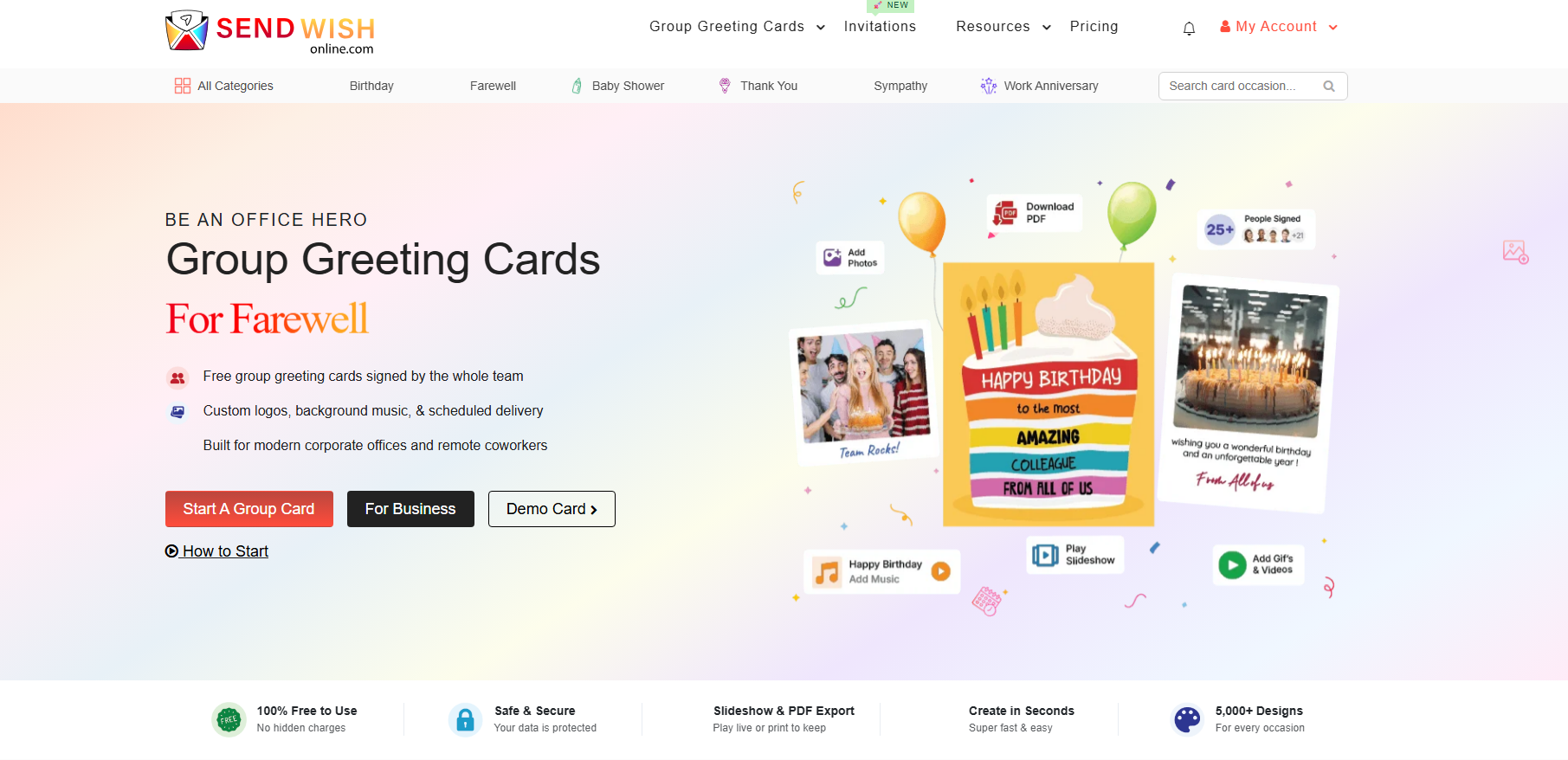
Sendwishonline’s free get well soon cards solve both common needs: sending a thoughtful card yourself and collecting support from a group. An organizer chooses a design, writes an opening note, and can either deliver the card personally or share a signing link with coworkers, friends, or family. People joining the card do not need to create an account, which removes an unnecessary barrier when a large group is contributing.
Its strongest advantage is how much emotion the card can carry without requiring everyone to be in the same place. Contributors can add written notes, photos, GIFs, voice or audio recordings, and video. A colleague can record a quick “we miss you,” a child can send a cheerful clip to a grandparent, and a remote team can combine individual messages in one organized card. The recipient can view the finished card as a greeting or slideshow, while a free PDF provides a version that can be saved.
Sendwishonline also works for more than office teams. A single sender can use it for a friend or relative, while group signing becomes especially valuable for workplaces, classrooms, clubs, and extended families. Cards can be scheduled, so the organizer can collect contributions in advance and have the finished card arrive at an appropriate time.
If the standard card format feels too limited for a long recovery, the free Wishboard provides a more open, kudos-board-style space for ongoing notes and photos. A lighthearted illness may also suit the dedicated funny get well soon cards, although humor should match the recipient and circumstances.
Best for: Individuals, families, friends, remote teams, offices, classrooms, and large groups wanting a feature-rich card without making signers pay or register.
Free or paid: The core get-well group card, Wishboard, scheduling, group contributions, and PDF download are available free. Bulk card sending is a separate paid option for organizations with recurring needs.
Where it may not fit: People who mainly want to print and hand-deliver a folded card may prefer a printable-first service such as Greetings Island. Also, the website should keep all feature and pricing copy synchronized so visitors never encounter older language about the PDF download.
2. TheeCards — Best Free Alternative for Regular and Animated Cards
TheeCards’ get well soon card collection is a useful alternative for people who want both regular and animated designs. The workflow is familiar: choose a card, personalize it, invite others when needed, and send the finished greeting online.
Its mix of free and premium options lets a user begin with no-cost designs while still having upgraded artwork available. The platform is particularly suitable when visual movement matters but the organizer still wants a recognizable group-card experience rather than a full design editor.
Best for: Users looking for a free Sendwishonline alternative with a choice between traditional and animated get-well designs.
Free or paid: Free and premium cards are available; check the label on the chosen design before inviting contributors.
Where it may not fit: Users who specifically need the widest multimedia mix, a Wishboard-style format, or organizational bulk sending should compare the exact features they need before choosing it.
3. Free for All eCards — Best Simple, No-Cost Group Card
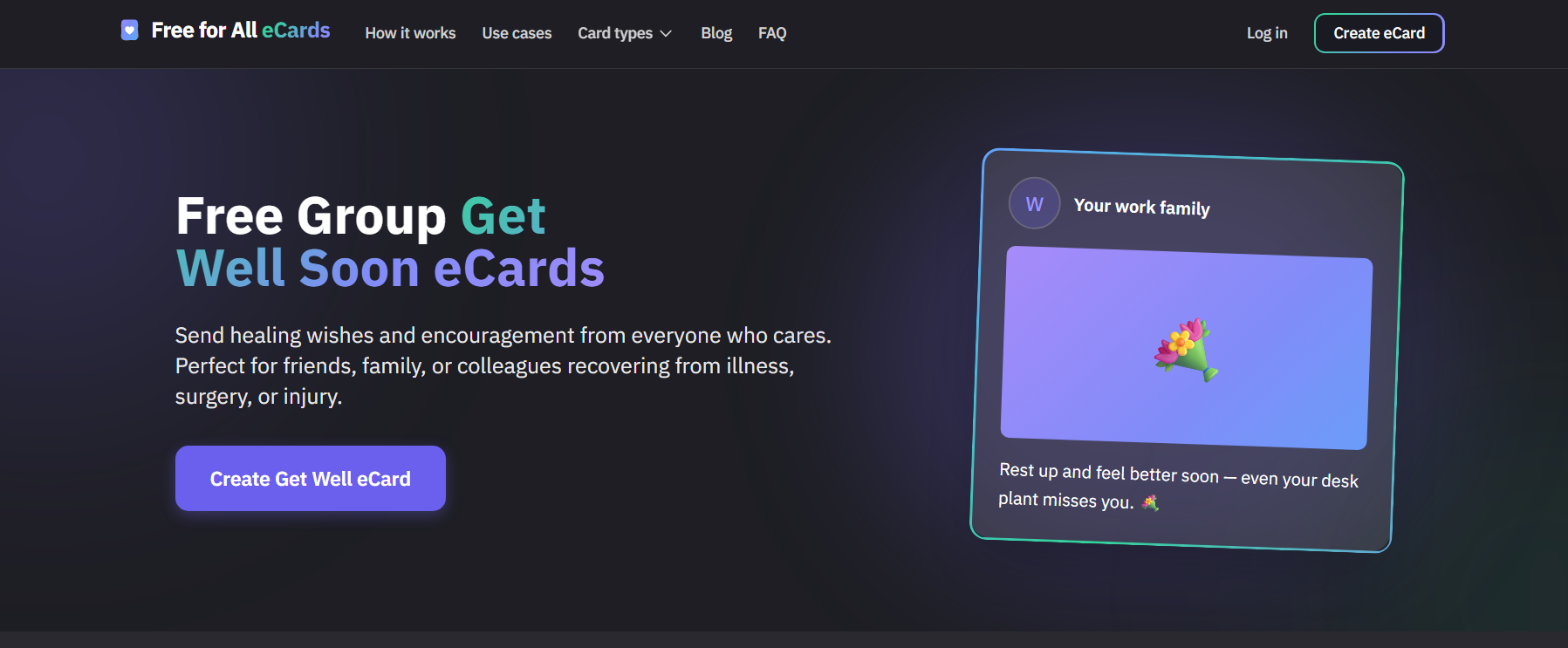
Free for All eCards has a refreshingly direct proposition: free group get-well eCards with unlimited signers and no account requirement. Contributors can add messages, photos, and GIFs, making it a strong option when the main objective is to gather support quickly without discussing a card budget.
The service is donation-supported and emphasizes the absence of ads and hidden charges. That clarity is valuable because “free” is interpreted so differently across the eCard market. It deserves a place near the top for users who value a simple, genuinely no-cost workflow more than a long list of advanced tools.
Best for: Informal groups that want unlimited digital signatures, basic media, and no surprise charge.
Free or paid: Free.
Where it may not fit: Its offering is more focused than the larger platforms. Users wanting voice recordings, richer video experiences, presentation formats, extensive workplace tools, or a large established design ecosystem may find another option more complete.
4. Greetings Island — Best Free Printable Get Well Card
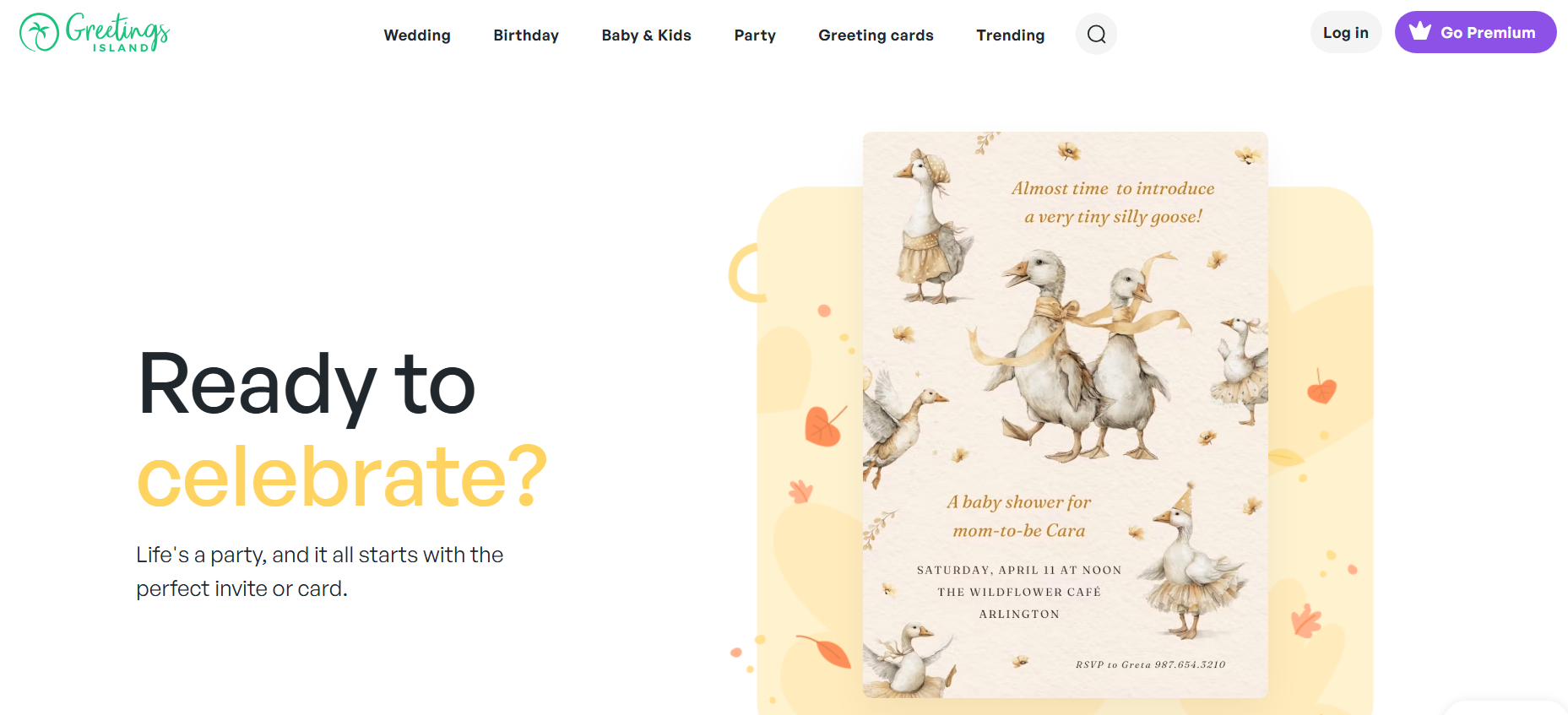
Greetings Island is the strongest choice here for someone who wants to start online but finish with a physical card. Its get-well templates can be personalized with text, photos, stickers, fonts, and colors, then downloaded as an image or PDF, printed at home, or sent digitally.
This flexibility works well for a relative who prefers paper, a child taking a card to school, or anyone who wants to place a signed card beside flowers or a care package. The editor offers more visual control than a typical fill-in eCard while remaining focused on greeting cards.
Best for: Personal cards, home printing, and users who want a quick printable design with digital-delivery options.
Free or paid: Free and premium designs are available. Printing at home can be free apart from paper and ink; premium assets and professional printing may cost extra.
Where it may not fit: It is better for designing a card than coordinating a large group-signing campaign. Teams needing frictionless individual contributions should use a dedicated group-card platform.
5. GroupGreeting — Best Traditional Multi-Page Group Get Well Card
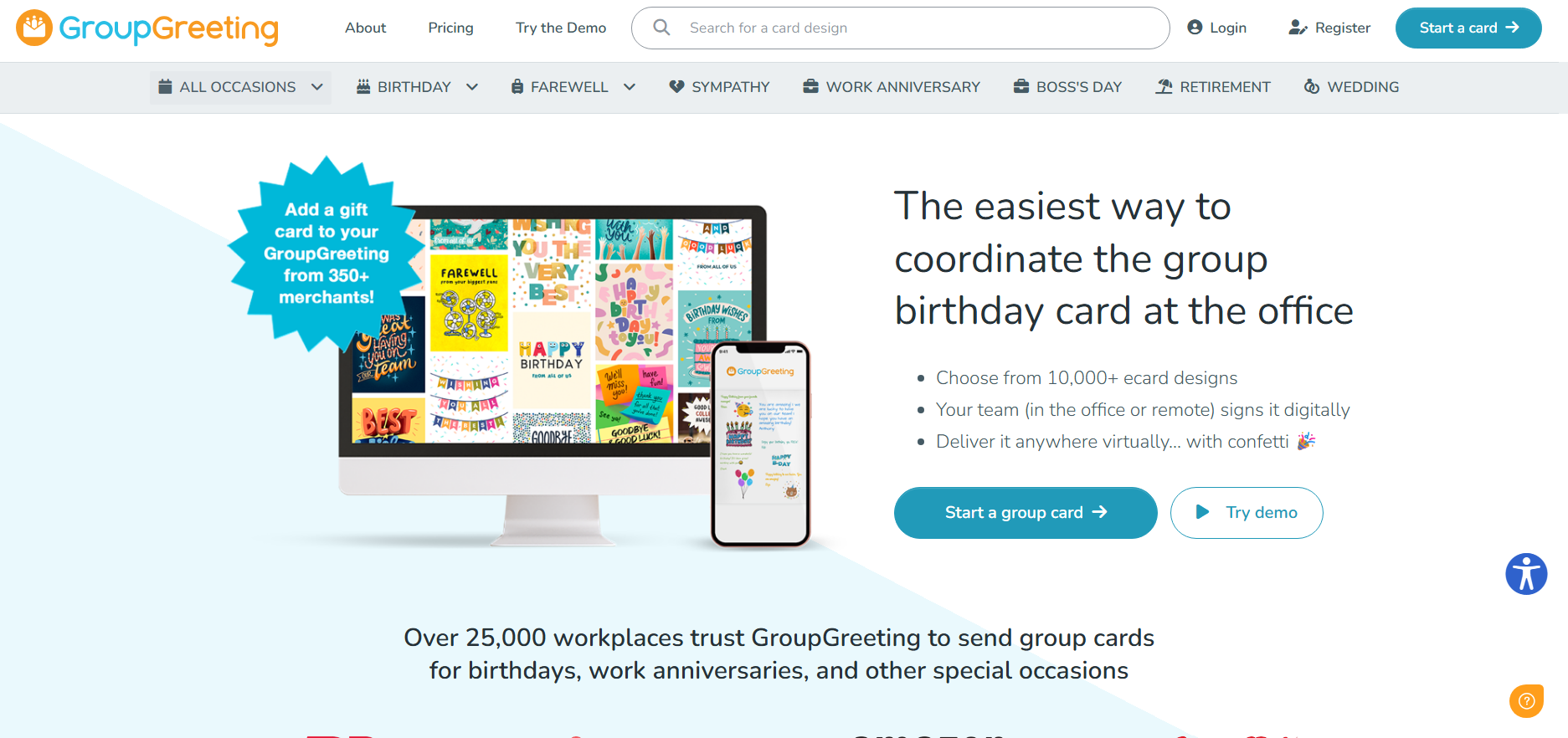
GroupGreeting recreates the familiar office card in a digital, multi-page format. The organizer selects a design and shares a private link; contributors add messages, photos, GIFs, and emojis before the card is delivered. Unlimited pages prevent the common problem of late signers having nowhere to write.
Scheduled delivery and PDF download make the service practical for a workplace. Optional gift cards can also accompany the greeting, although organizers should consider whether a gift feels appropriate for the recipient’s situation.
Best for: Offices and organized groups willing to pay for a polished, conventional card with plenty of signing space.
Free or paid: Paid, with a single card starting at $5.99 at the time of review; optional gifts cost extra.
Where it may not fit: It is not the best answer to a search for a completely free group get-well card. Individuals may also find its unlimited-page structure more than they need.
6. Kudoboard — Best Multimedia Recovery Board
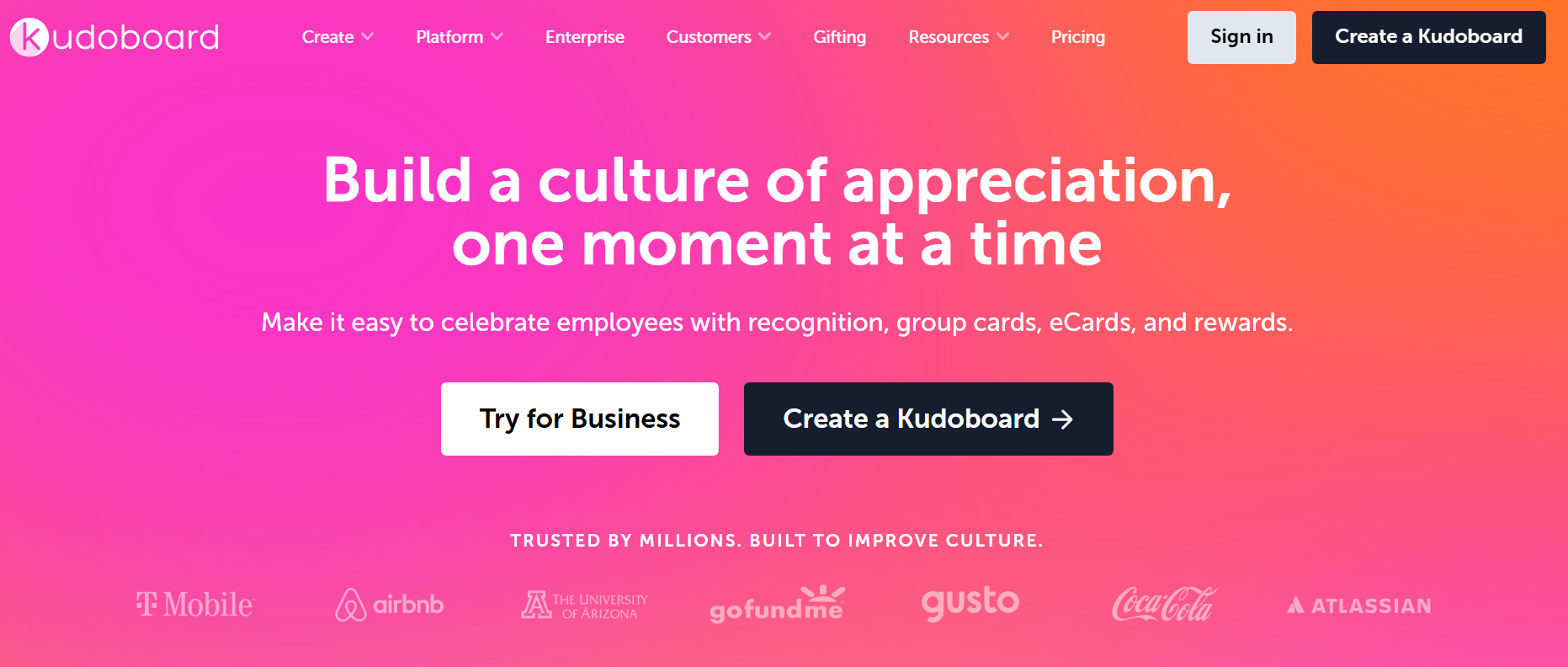
Kudoboard’s get well soon cards feel more like a collaborative wall of support than a folded greeting card. Participants can add messages, photos, GIFs, and video, and the board can be presented digitally or turned into a printed book or poster. This format is helpful when many people have memories, photographs, or longer encouragement to share.
For an extended recovery, a board can feel more substantial than a single short greeting. It is especially suitable for a close team, school community, club, or family network that wants to create a visual collection rather than imitate a paper card.
Best for: Large multimedia tributes, recovery boards, slideshow presentations, and physical keepsakes.
Free or paid: Paid plans vary by capacity and features. At the time of review, Lite starts at $6.99 for up to 20 posts, Premium at $9.99 for up to 100 posts with video and download, and Milestone at $19.99 with unlimited posts and slideshow features.
Where it may not fit: It can be more elaborate and more expensive than necessary for a quick personal greeting. The board format may also feel too public or celebratory for a sensitive medical situation, so the organizer should choose the tone carefully.
7. Thankbox — Best Get Well Card With a Group Gift Collection
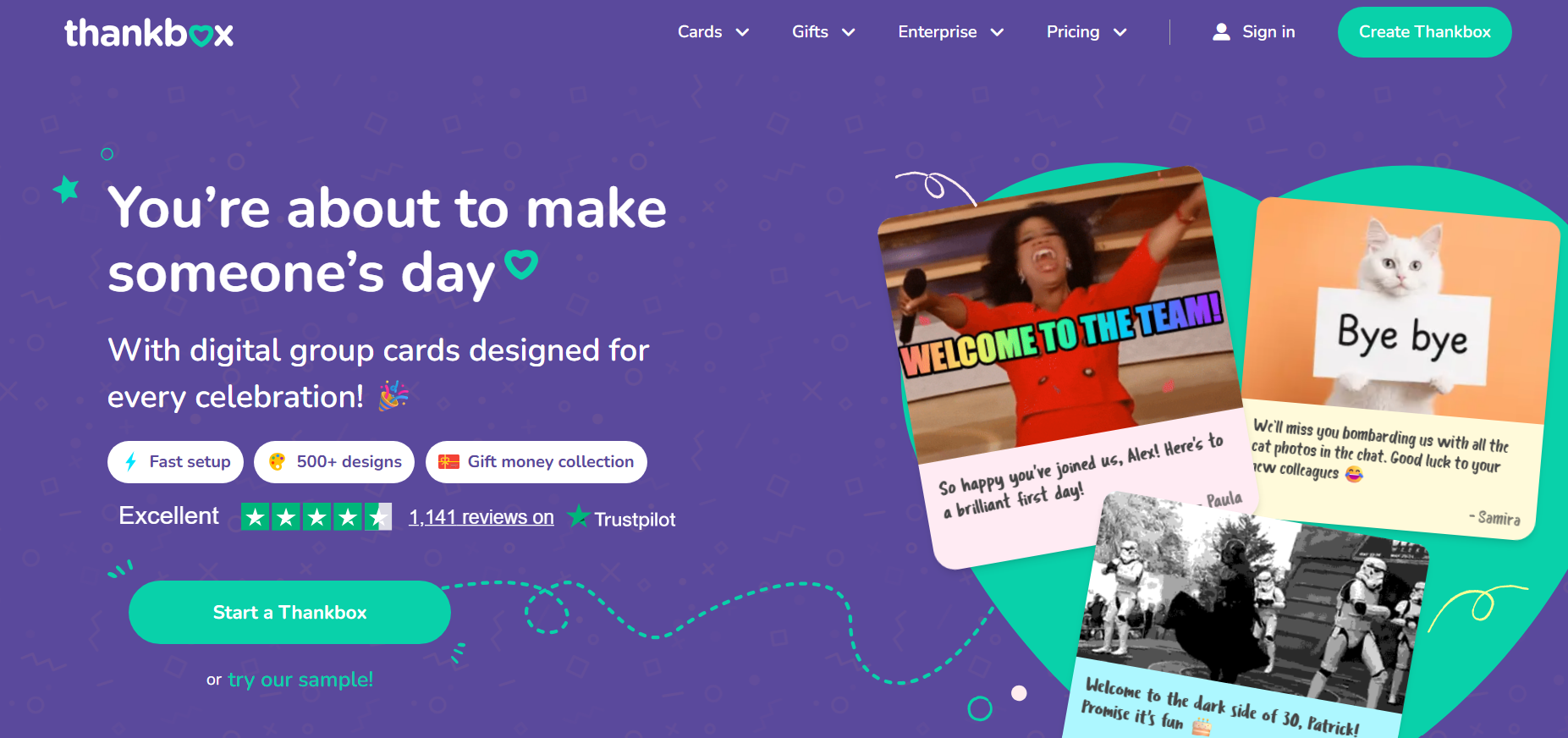
Thankbox combines collaborative messages with group gifting. Contributors can add text and media to an eCard or message-board layout, while the organizer can collect money for a digital gift. This is useful when friends or coworkers want to pair encouragement with practical help, such as a meal-delivery, grocery, entertainment, or general-purpose gift card.
The card and collection remain separate decisions: a person should never feel pressured to contribute money in order to leave a caring message. Used thoughtfully, however, the combination can turn kind words into support that helps during recovery.
Best for: Teams and friendship groups that want one place for supportive messages and an optional pooled gift.
Free or paid: The card service is paid; gift collections and available redemption options vary by location and choice.
Where it may not fit: It is not the first choice for someone searching only for a free eCard. Before collecting money, confirm that the gift options are useful in the recipient’s country and appropriate for their circumstances.
8. GotFreeECards — Best No-Signup Animated Get Well Card
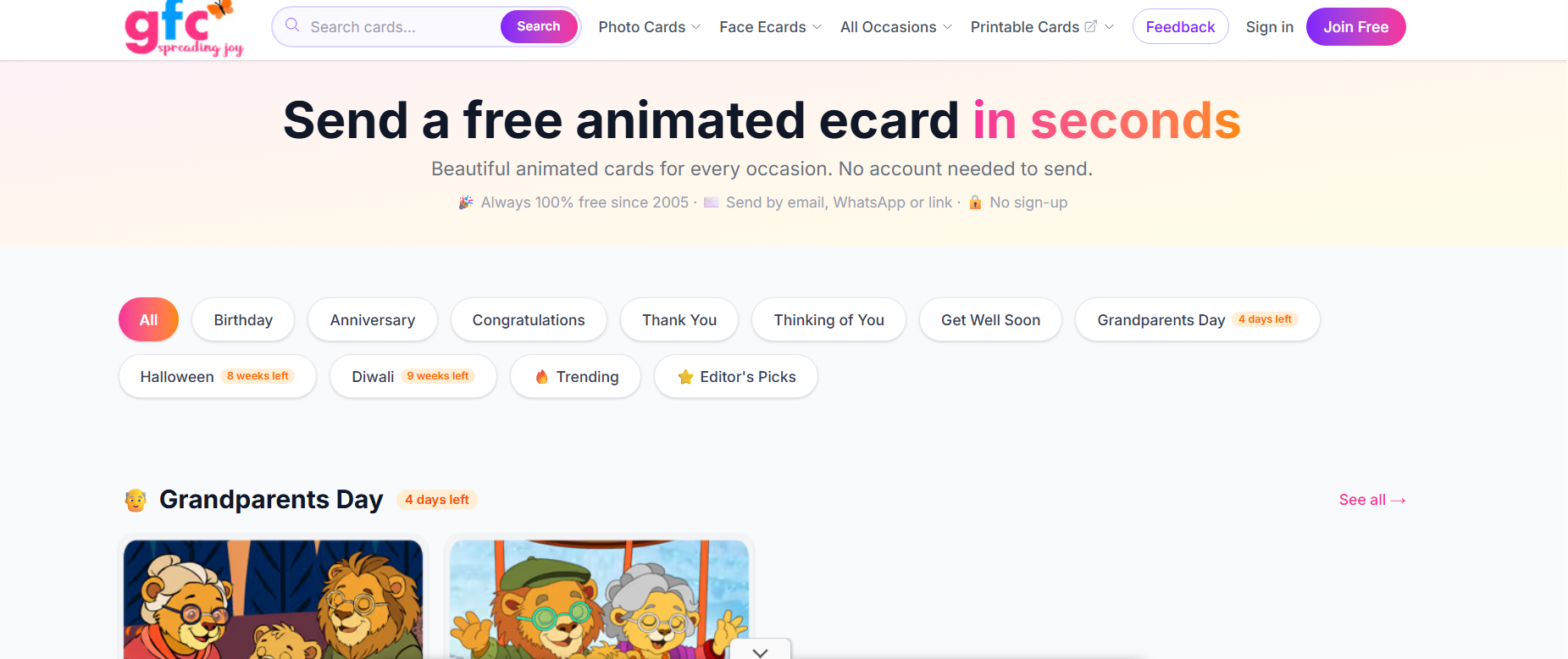
GotFreeECards is a dedicated eCard service for someone who wants to send a cheerful animated get-well greeting without creating an account. Its get-well collection is smaller than the libraries of some long-established brands, but the process is direct: choose an animation, personalize the greeting, and share it by email, WhatsApp, or a card link.
The service states that its animated cards are always free, rather than temporarily available through a membership trial. Cards work on phones and computers, the recipient does not need an app or account, and future delivery can be scheduled. Those details make it a more relevant inclusion than a general-purpose design tool for people specifically searching for a free get well eCard website.
Best for: A free animated get-well card sent by email, WhatsApp, or link with no signup.
Free or paid: Free.
Where it may not fit: There were 17 get-well designs available at the time of review, so the choice is narrower than on larger platforms. It is also designed mainly for a personal animated greeting rather than collecting separate messages from a large group.
9. 123Greetings — Best for a Quick Free Animated Get Well eCard
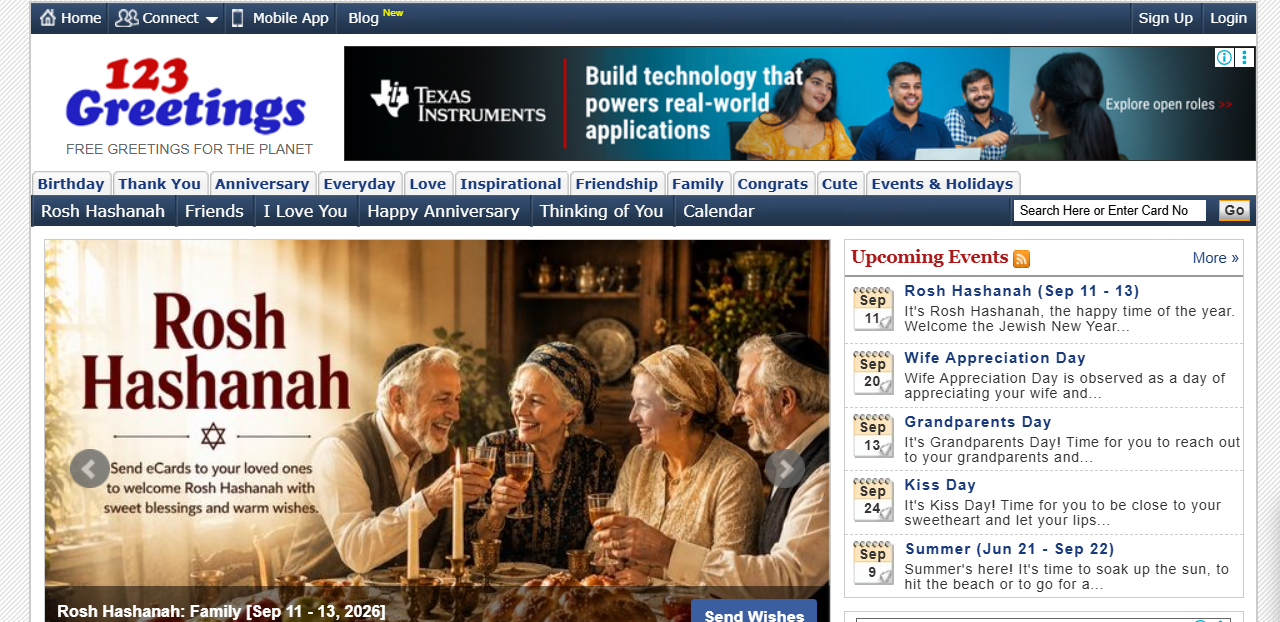
123Greetings has a broad collection of free animated cards for different recovery tones. It works when one sender wants to choose an animation, write a short personal note, and send it without building a collaborative board.
The large category selection makes it easy to find something cheerful, humorous, spiritual, or gentle. It is a familiar option for a spontaneous “thinking of you” card when speed matters more than advanced customization.
Best for: A fast, free, animated get-well greeting from one sender.
Free or paid: Free and supported by advertising.
Where it may not fit: It is not a purpose-built group-signing experience, and the ad-heavy presentation may feel less polished than paid services or modern collaborative cards.
10. American Greetings — Best Established Premium eCard Library
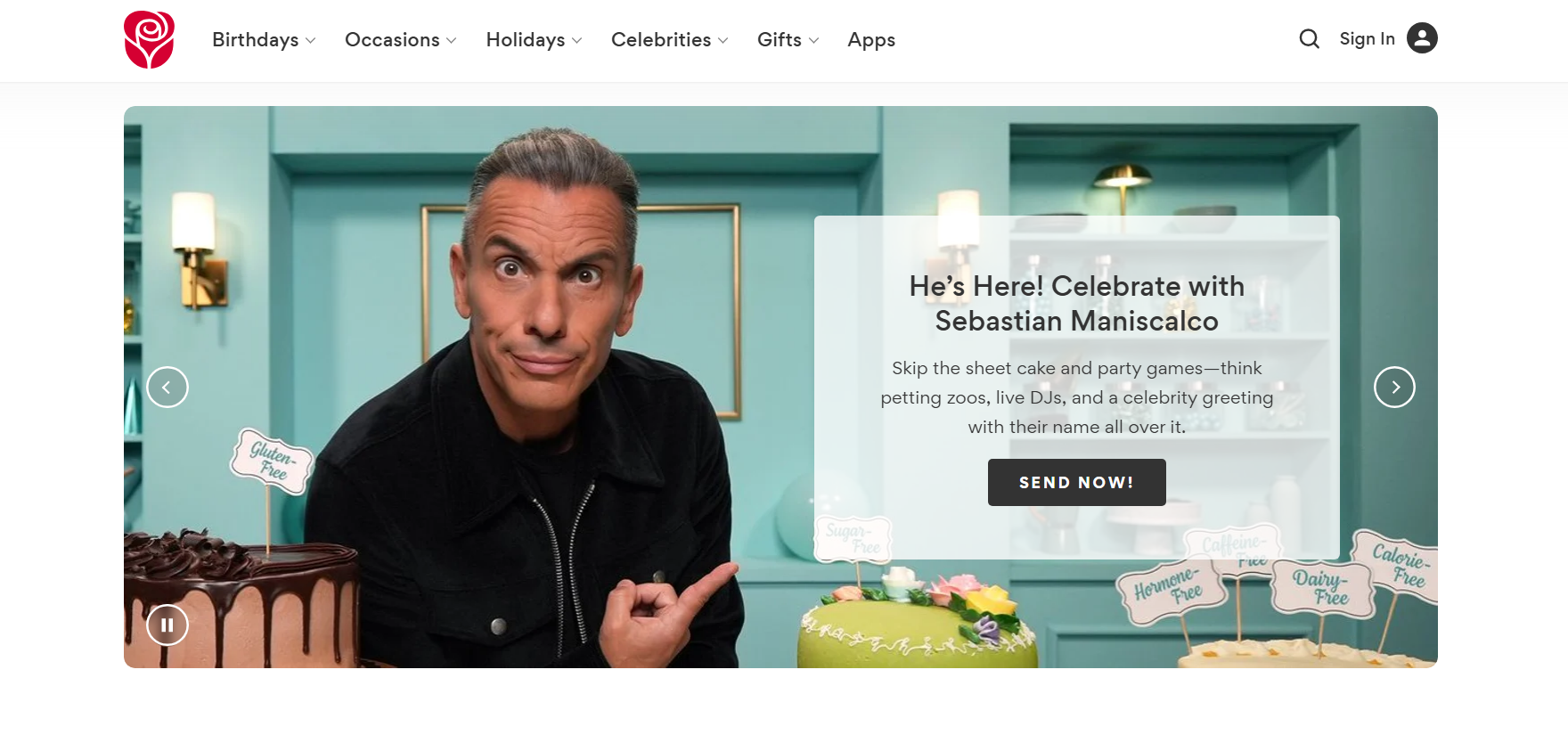
American Greetings offers polished get-well eCards from a long-established greeting-card brand. Cards can be personalized with a message and delivered digitally, and membership provides access to the broader eCard catalog. It is most appealing to someone who sends cards often enough to benefit from a subscription rather than paying attention to a single free card.
Best for: Frequent eCard senders who prefer a recognized brand and a polished premium library.
Free or paid: Membership-based, with a free-trial offer available at the time of review. Confirm the current trial and renewal terms before subscribing.
Where it may not fit: A free trial is not the same as an always-free card service. It is also less suitable than a dedicated group platform when many people need to sign separately.
Which Get Well Soon eCard Site Should You Choose?
Choose according to the job the card needs to do, not simply the first result that displays attractive templates.
- Choose Sendwishonline when you want the strongest all-around balance of free use, individual or group sending, no-account signing, multimedia messages, scheduling, and a downloadable keepsake.
- Choose TheeCards when you want another free group-card option with both regular and animated designs.
- Choose Free for All eCards when a basic, no-ad, unlimited-signature group card is the priority.
- Choose Greetings Island when you want to print the finished card at home.
- Choose GroupGreeting when your office wants a paid, traditional multi-page digital card.
- Choose Kudoboard when a visual board, video collection, or printed recovery keepsake matters more than a card-like format.
- Choose Thankbox when the group also wants to collect a practical recovery gift.
- Choose GotFreeECards when you want a no-signup animated card that can be shared through WhatsApp or a direct link.
- Choose 123Greetings when one person wants to send a quick free animation.
- Choose American Greetings when you prefer a premium subscription library and expect to send eCards regularly.
For most mixed groups, Sendwishonline remains the easiest starting point because people can contribute without accounts and the organizer does not have to choose between a free card and richer personal touches. If you are unsure what to write after choosing a design, these get well soon messages provide tone-specific ideas without turning the card into a generic copy-and-paste greeting.
How to Make an Online Get Well Card Feel Genuinely Supportive
The website provides the format; the group creates the feeling. A few choices can make the finished card kinder and more useful.
Match the tone to the situation
A playful card may lift the mood during a minor illness, but humor about hospitals, pain, appearance, or recovery time can land badly. For a serious diagnosis or an uncertain recovery, keep the design calm and the language supportive. Avoid promises such as “you will be back to normal in no time” unless you know that certainty is welcome.
Remove pressure from the recipient
Messages such as “No need to reply—we are thinking of you” are often more considerate than questions that create another task. Similarly, do not ask for medical details in a group card. Let the recipient decide what they want to share and with whom.
Make group messages additive, not repetitive
Ask contributors to share one specific memory, one quality they appreciate, or one small thing they look forward to doing together. Twenty variations of “get well soon” show care, but a mixture of short notes, photographs, and personal memories feels more human.
Time the delivery thoughtfully
An immediate card is appropriate after hearing the news, but it is not the only useful moment. Support often drops off after the first few days. A scheduled card during week two of recovery—or a second card later—can arrive when encouragement is especially welcome. For wording, tone, and timing help, use the practical get well soon card guide.
Offer specific help only when you can provide it
“Let me know if you need anything” is kind but difficult to act on. When appropriate, offer something concrete: delivering a meal on Tuesday, covering a meeting, watering plants, driving to an appointment, or sending class notes. Keep the offer private if it involves medical or personal information.
Frequently Asked Questions
What is the best free get well card website?
Sendwishonline is the best overall free option in this comparison because it supports both individual and group cards, contributors can sign without accounts, and cards can include text, photos, GIFs, audio or voice recordings, and video. Scheduling and a free PDF download make it useful for both quick greetings and organized group support. Free for All eCards is a strong simpler alternative for unlimited text, photo, and GIF contributions.
Can I send a get well eCard for free?
Yes. Sendwishonline, TheeCards, Free for All eCards, Greetings Island, and 123Greetings all provide free routes, but the type of free card differs. Some are collaborative group cards, some are printable templates, and others are single-sender animated greetings. Check whether the specific design and delivery method are free before collecting messages.
Can everyone sign an online get well card?
Yes, if you choose a group-card service. The organizer normally creates the card and shares a private contribution link. Sendwishonline and Free for All eCards allow people to contribute without making accounts, while other services may impose a post limit or require a paid card.
Do recipients need an account to open a digital get well card?
Not on every platform. With Sendwishonline, the recipient can open the shared card link in a browser without creating an account or installing an app. Account and access requirements differ by provider, so this should be checked before choosing a service for a less technical recipient.
Can I add photos, audio, or video to a get well soon card?
Sendwishonline supports photos, GIFs, audio or voice recordings, and video, making it the broadest multimedia option among the free services reviewed here. Kudoboard is another strong choice for photo- and video-led group support, while Free for All eCards focuses on messages, photos, and GIFs.
What should I write in a get well soon eCard?
Keep it warm, specific, and free of pressure. Mention that you are thinking of the person, add a genuine detail, and offer practical help only if you mean it. “Thinking of you and sending strength. No need to reply—we are all here when you need us” is safer than predicting how quickly someone will recover.
Is a funny get well card appropriate?
It can be appropriate for a minor illness or when humor is already part of your relationship. Avoid jokes about a diagnosis, pain, age, hospitals, or recovery time. When in doubt, choose gentle warmth over comedy.
Can I download or print an online get well card?
Yes, on selected services. Sendwishonline provides a free PDF download, Greetings Island supports downloadable print formats, GroupGreeting offers PDF download with its paid card, and Kudoboard offers digital downloads or paid print products depending on the plan.
Are group get well cards suitable for coworkers?
Yes. A group card gives colleagues one private place to show support without overwhelming the recipient with separate notifications. Use professional but personal wording, avoid sharing medical details, give contributors a clear signing deadline, and schedule delivery for a considerate time.
Final Verdict
The best get well eCard should reduce effort for everyone involved—especially the person receiving it. Sendwishonline ranks first in this comparison because it combines genuinely free sending with an easy individual-or-group workflow, no-account contributions, multimedia encouragement, scheduled delivery, slideshow viewing, and a downloadable PDF. Those features serve the actual recovery moment rather than merely decorating a message.
The other websites remain worthwhile for specific needs: Greetings Island for printing, GotFreeECards for a quick no-signup animation, GroupGreeting for a traditional paid office card, Kudoboard for a large multimedia board, and Thankbox for an optional group gift. Choose the service that matches the recipient, the group, and the kind of support you want to send—not simply the platform with the longest feature list.
Recent Articles
How to Collect RSVPs Easily with Digital Invitations
How to Create a Wedding Invitation Online in 3 Minutes: A Full Step-by-Step Guide
Top 10 Free Online Invitation Makers (and Why Ours Is #1)
10 Best Graduation Invitation Websites for 2025
10 Best Holiday Party Invitation Websites for the Festive Season
10 Best Websites for Housewarming Invitations | Invite Loved Ones Easily
10 Best Engagement Invitation Websites for Modern Couples
10 Best eCard and Invitation Websites for Special Occasions
10 Best Free Invitation Websites for Birthdays, Weddings & More
10 Best Websites for Baby Shower Invitations | Celebrate Parenthood in Style